Skills
Manage skills with reliable benchmarks.
Map skills, measure gaps, and secure career paths. A module designed to help HR objectively assess mobility, prepare successors, and anticipate needs, with an operational talent management system tailored to each organization.
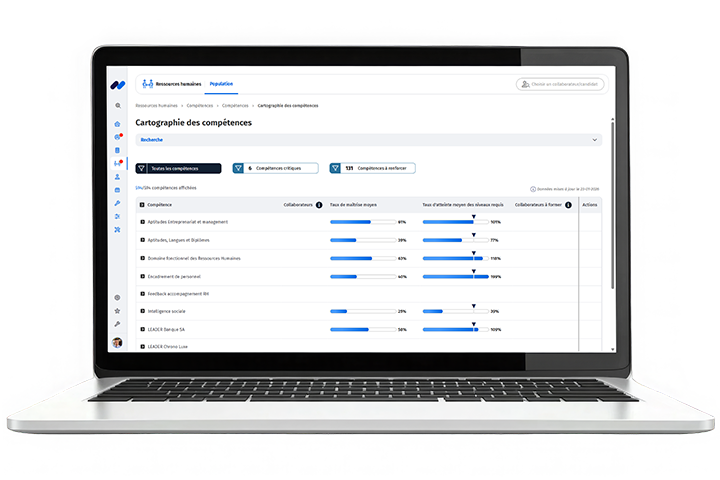
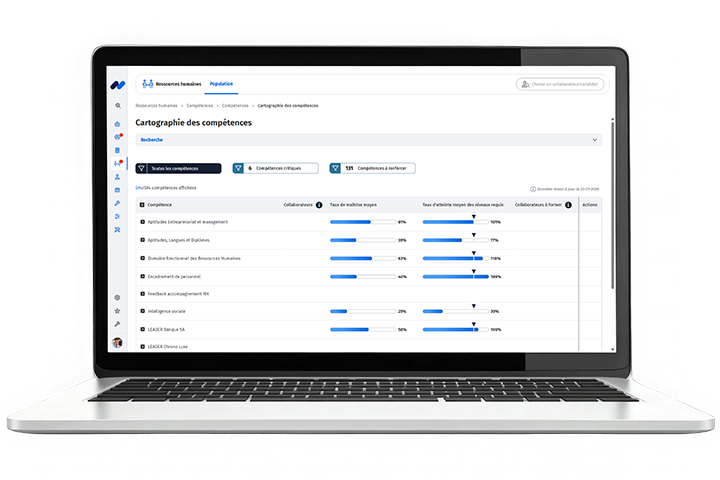
Do you have a clear picture of the skills that are actually available?
Between outdated frameworks, ad hoc assessments, and scattered information, HR lacks visibility into actual skills. Decisions regarding mobility, succession, or development become risky due to the lack of shared, up-to-date benchmarks.

Standards that are difficult to apply
Competencies are described but rarely assessed over time. Without regular updates and a connection to HR practices, competency frameworks become theoretical and of little use in decision-making.
Risky internal mobility
Implementing mobility initiatives without a clear understanding of skill gaps puts career paths at risk. Managers lack objective benchmarks, and HR runs the risk of making decisions that are either weak or controversial.
Difficulty in identifying areas of expertise
Quickly identifying key areas of expertise remains a challenge. Information is scattered, often informal, and difficult to consolidate, particularly in organizations with multiple locations or those undergoing rapid change.
Successors who are inadequately prepared
High-risk positions are identified too late. Without a structured view of current and future skills, succession plans are based more on urgency than on foresight.
It doesn’t have to be that way.
Switch to a truly structured skills management system with Adequasys
The Skills module ensures the reliability of your standards and data—
—enabling you to make informed decisions and ensure the safety of training pathways.
Reliable mapping
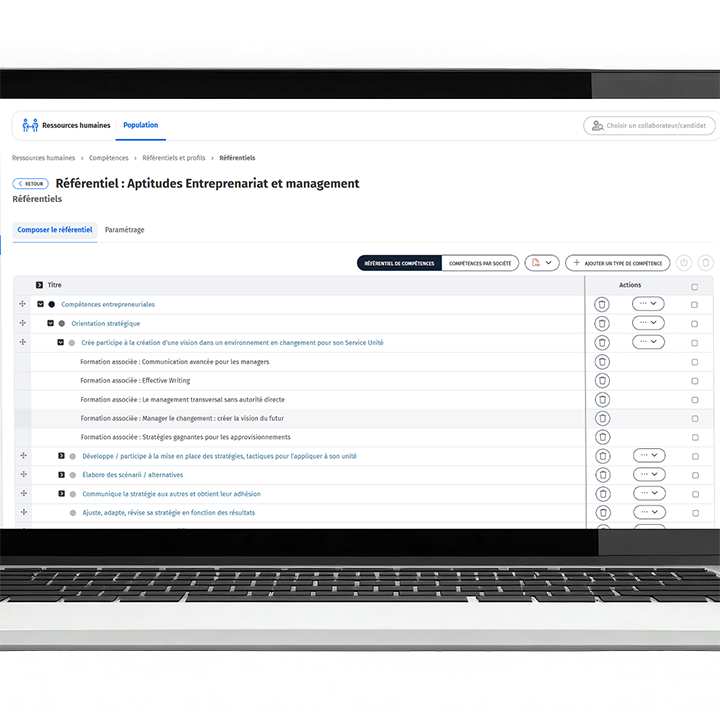
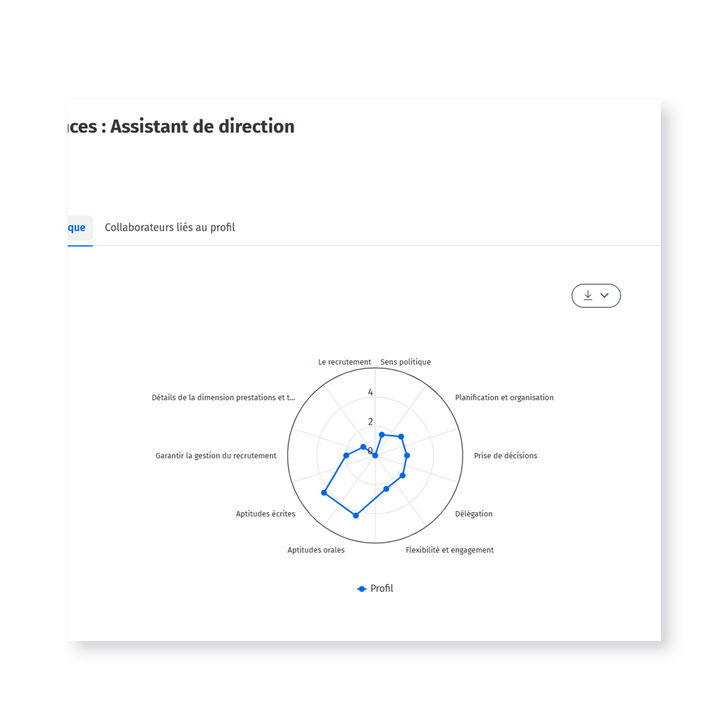
Organize your competency frameworks and job profiles within a common, scalable framework. You’ll have a reliable, shared foundation for analyzing gaps, comparing situations, and ensuring the soundness of all your decisions regarding career paths and mobility.
Enhanced assessments
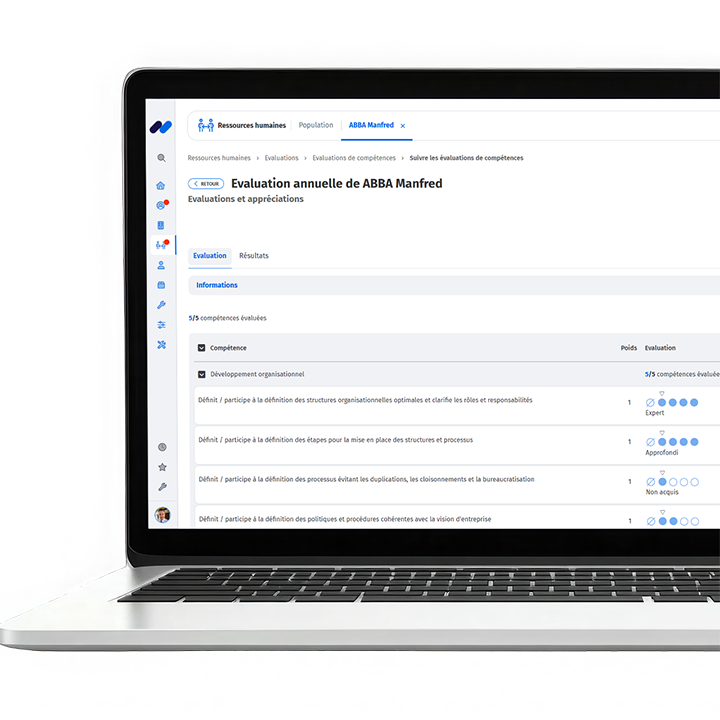
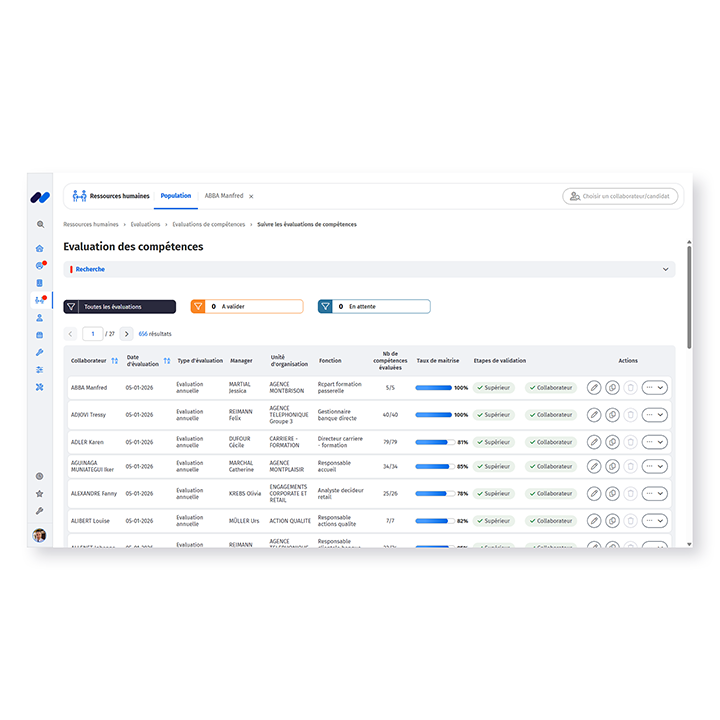
Self-assessment, manager preparation, and final evaluation are integrated into a single process. This integrated approach enhances the quality of discussions, fosters ownership among participants, and ensures a more reliable assessment of the skills that have actually been mastered.
Objective mobility
Skill gaps and match rates are visible and comparable. Decisions regarding mobility or career advancement are based on factual information that is understandable to both managers and employees, thereby minimizing the risk of decisions being perceived as arbitrary.
A concrete plan
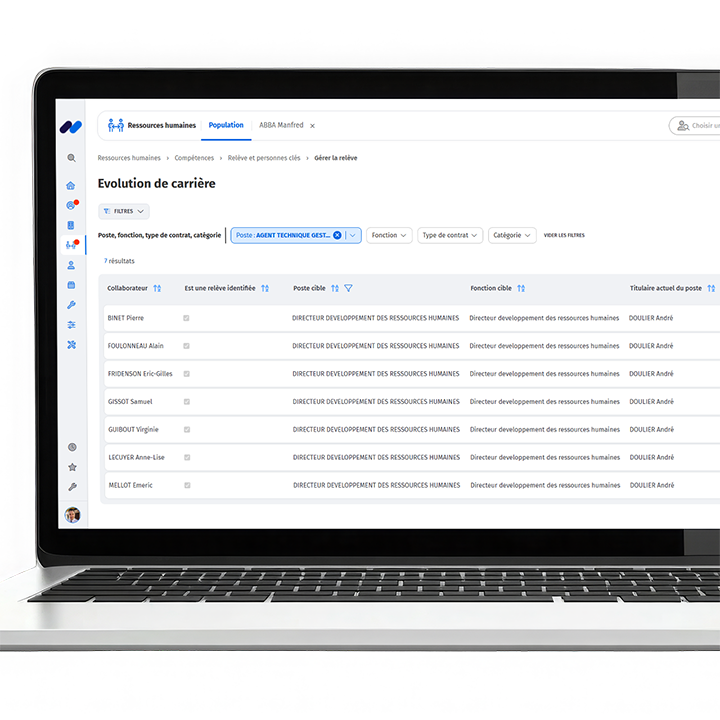
Key positions, rare expertise, potential successors: risks are identified early on. HR can prioritize development initiatives and create realistic career paths aligned with the organization’s future needs.

Find out how your teams will experience skills management on a day-to-day basis.
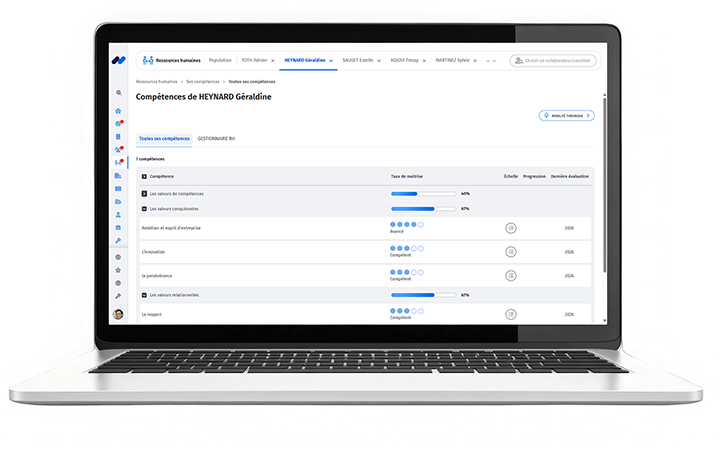
Skills Assessment
The employee and the manager assess competencies based on defined profiles, within a shared framework that clarifies expectations and aligns the required levels with the realities of the job.
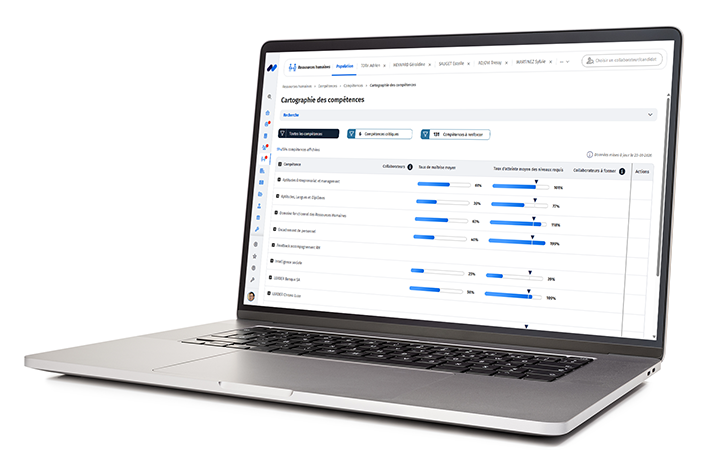
Variance Analysis
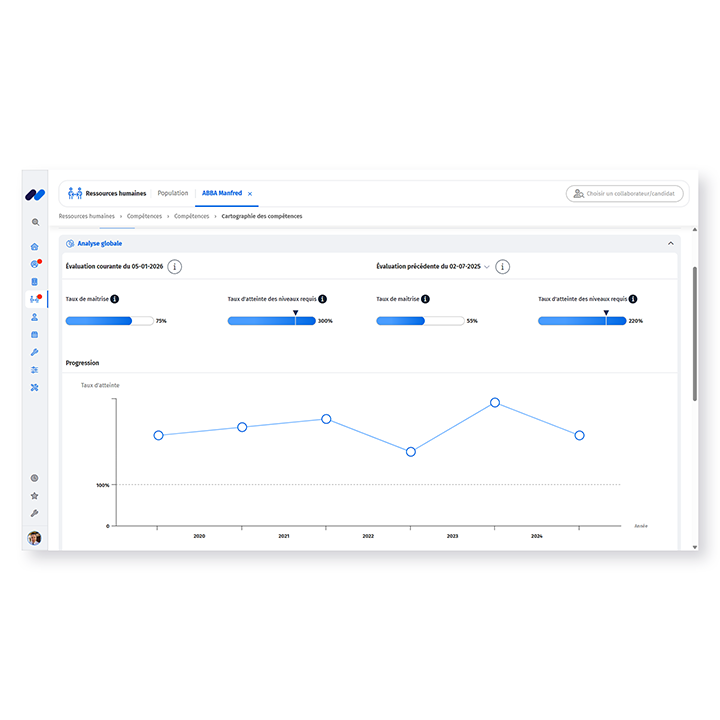
Discrepancies between expected skills and actual skills are automatically identified, providing HR and managers with a clear picture of development priorities.
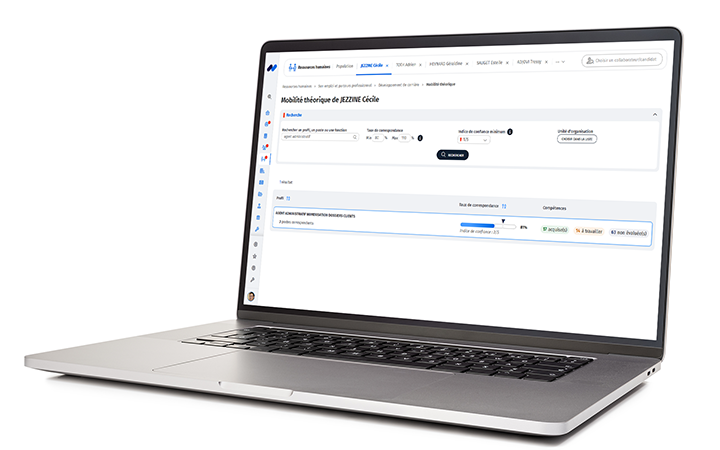
Route projection
Mobility opportunities and potential career paths are mapped out, taking into account the gaps that need to be bridged and the efforts required to ensure a smooth transition.
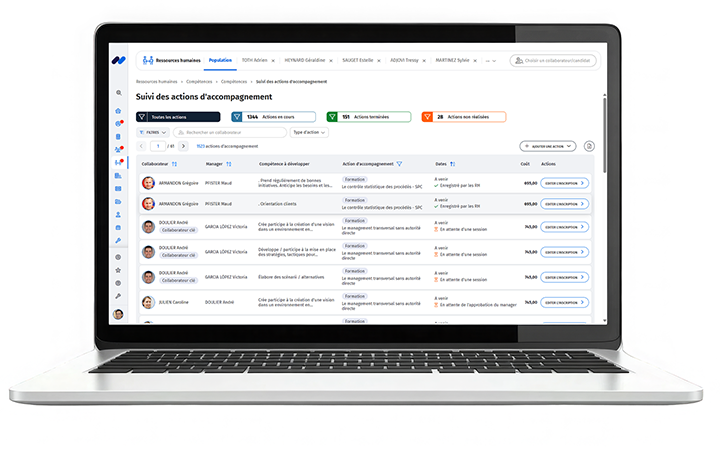
Development initiatives
Actions are formalized, prioritized, and tracked over time, ensuring a direct link between skills assessments and HR decisions.
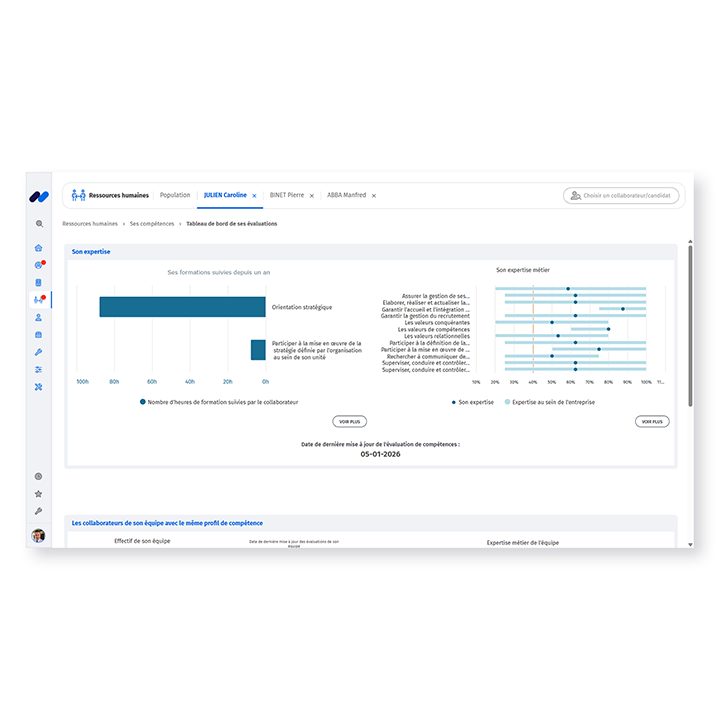

The Skills module is
integrated to your entire HRIS
Performance evaluations, organizational structure, and development initiatives are all built on the same foundation. Competencies are integrated into an ongoing HR process—without specific synchronization—to ensure career progression and support decisions regarding mobility and succession planning.
Skill assessments aligned with coherent HR development paths.